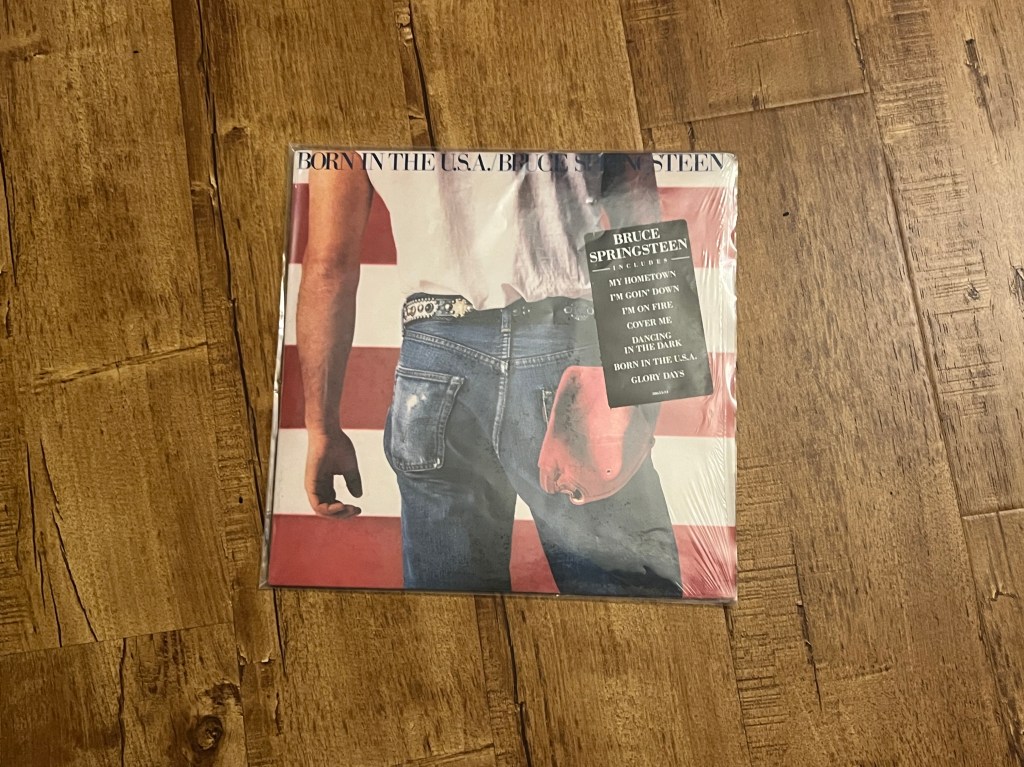
Over the past few days, I’ve been making notes while listening to Bruce Springsteen’s Born in the U.S.A. I’ve probably listened to the album about three times now, each spin revealing something new. Originally released in 1984 during Ronald Reagan’s presidency, the album came out at a time when America was wrapped in patriotic fervor but beneath that surface, Springsteen was telling stories of working-class hardship, economic decline, and veterans forgotten by the country they served.

The title track, Born in the U.S.A., is famously misunderstood. With its booming chorus and fist-pumping energy, many took it as a proud anthem. But listening closely, the lyrics reveal a very different story: “Born down in a dead man’s town. The first kick I took was when I hit the ground.” It’s about a Vietnam veteran coming home to neglect and economic turmoil. Reagan tried to use the song for his campaign, but Springsteen refused to let it be co-opted.
Other songs explore different sides of that American experience. Cover Me is a desperate plea for shelter, “Cover me, come on, girl, to the river or the road,” wrapped in synth and emotion. It feels like a fight against a world that’s closing in. Darlington County takes us on a road trip chasing work and women but the freedom of the highway is deceptive. The harmonica warns us as two men “slam into the reality of dead-end towns and cops with itchy trigger fingers.”
Working on the Highway captures the grind and disillusionment of labor with a jaunty melody, while Downbound Train is one of the bleakest tracks, with lines like “The nights are getting closer. Feeling’s slipping away” painting a picture of lost futures. I’m on Fire simmers with quiet longing and class tension: “Hey, little girl, is your daddy home? Did he go away and leave you all alone?”
No Surrender might seem like a rallying cry, but there’s a bittersweet nostalgia: “We learned more from a three-minute record than we ever learned in school.” It’s a nod to lost innocence and hard-earned lessons outside the classroom. Bobby Jean is a bittersweet farewell: “I loved you then and I love you still,” while I’m Goin’ Down hides heartbreak beneath a playful beat.
Glory Days cuts deep into the ache of nostalgia with “I’m going down to see my old school friend,” lamenting faded youth and missed chances. And the big hit, Dancing in the Dark, often seen as a pop anthem, is really a song about frustration and desperation: “You can’t start a fire without a spark.” What happens when hope feels out of reach?
Finally, My Hometown closes the album quietly but powerfully. “I’m eight years old and running with a dime in my hand,” the narrator recalls, but the town is dying and the future feels bleak. The cycle of lost jobs and deepening division repeats.

Listening on vinyl and cassette, I found myself forced to slow down and really absorb the words and moods, something that gets lost in the shuffle of streaming. The frustration of rewinding or flipping the tape only made the experience feel more intentional. This album isn’t just a collection of songs; it’s a deep, sometimes painful examination of America’s promises and failures.
Read the full review on my website.
 𝐃 𝐗 𝐌 𝐈 𝐍 𝐈 𝐐