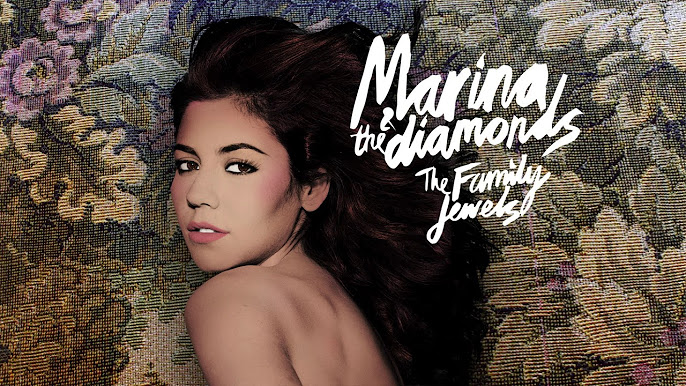
I remember confusing Marina and the Diamonds with Marina Abramović. An easy mistake to make if you’re twenty, half-jaded, and just beginning to think that pop music might be smarter than you’d been led to believe. I thought Lady Gaga was referencing her with the artifice, the glamour, the grandiosity. But it wasn’t her. It didn’t need to be. Marina Diamandis was already doing something just as performative—just as razor-sharp—but wrapped in synth-pop and smiling sadness.
Even back then, I loved intentional pop music. The kind that knows it’s pop, that plays with the rules while mocking them. I was a scene kid who wore eyeliner and claimed to hate Top 40, but I always admired artists who treated the genre like a stage and used their songs as monologues. Marina did that. She held up a mirror to the very machine she was stepping into and asked us if we could stand what we saw. That tension—the craving for validation mixed with disgust for the game—never really left me.
In 2025, I started seeing her name again. People were rediscovering her. I felt it in my gut like an old friend walking into a room. So I sat down and listened to The Family Jewels again, not in passing, not as a soundtrack to cleaning or walking, but as a study. I let the record speak. And it did—loudly, weirdly, truthfully.
Listening to this album again felt like opening a time capsule, except the time capsule was somehow more relevant now than it was when it was first buried. The anxious ambition, the shame folded into femininity, the gleaming discomfort of wanting to be seen—it all hit harder. Back then, it felt like commentary. Now, it feels like documentation.
What struck me this time wasn’t just the intelligence of the lyrics, but how raw it all felt under the layers of performance. Marina sang like someone desperate to both escape herself and be understood by everyone. The theatricality isn’t there to mask emotion—it’s how she expresses it. Each song feels like a costume change with the same wound underneath.
I didn’t expect to be moved. I thought I would listen with academic distance, maybe chuckle at how dramatic it all was. Instead, I found myself nodding along with clenched fists and a tight throat. Not because I felt nostalgic, but because I felt implicated. The things she was singing about—the ways women contort themselves, the loneliness of being “too much,” the desire to be extraordinary without becoming hollow—still feel urgent.
The Family Jewels is a strange and glittering relic. It doesn’t try to be likable. It’s full of contradictions—glamorous and grotesque, funny and sad, performative and painfully real. And somehow, it all works. Marina’s voice is as much a weapon as it is a confession booth.
Coming back to this album in 2025, I realize it was never meant for the moment it came out. It was meant for now. For when we understand how much of our lives are curated performances. For when the rot beneath the glitter is no longer surprising. It hasn’t aged; it’s revealed.
And it reminds me that sometimes, pop music tells the truth better than anything else.
Read the full review on my website.
 𝐃 𝐗 𝐌 𝐈 𝐍 𝐈 𝐐